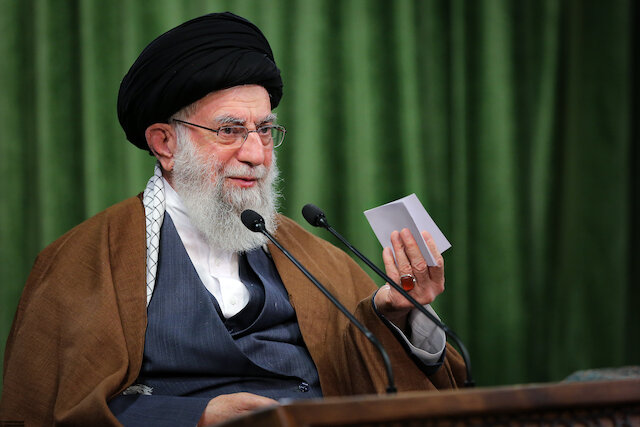
Anniversary of the Leader’s statements on the Karabakh war
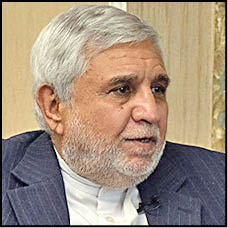
November 3rd is the anniversary of the Leader of the Islamic Revolution making statements regarding the Karabakh war between Azerbaijan and Armenia. In the following Op-Ed, Mohsen Pakaeen, Iran’s former ambassador to Azerbaijan, attempts to review the significance of Imam Khamenei’s stance in regard to the Karabakh war and also its relevance for the present situation in the region.

November 3rd is the anniversary of the Leader of the Islamic Revolution making statements regarding the Karabakh war between Azerbaijan and Armenia, the bloody, full-scale war which began on October 3, 2020 and continued for some time. Last year, Imam Khamenei stressed the bitter, threatening nature of this conflict for the security of the region and stated, “This war must come to an end as soon as possible. Of course, all lands belonging to Azerbaijan and occupied by Armenia should be freed and evacuated.”
In addition, the Leader of the Islamic Revolution emphasized the necessity of ensuring the safety of the Armenians living in those areas and also the need for the conflicting sides to respect international borders. Moreover, Imam Khamenei maintained, “Terrorists, whom according to certain reliable reports have become involved in this and that border, should not be allowed to be located near our borders. If they are located near our borders, we will certainly confront them.” The Islamic Republic of Iran is neighbors with the countries of Azerbaijan and Armenia and common grounds exist between them. Few countries can be found like the Islamic Republic of Iran and Azerbaijan that share a common religion, history, and culture.
Armenia too is a neighbor and friend of the Islamic Republic of Iran. Based on the principles of being neighbors and mutual respect, the two countries have enjoyed a long, friendly relationship. Accordingly, the conflict and war between these two countries is not acceptable to Iran and that is why Imam Khamenei stated, “This war is a bitter event as it threatens the security of the region, and it is not good for our country either. It should come to an end as soon as possible.” The Leader of the Islamic Revolution in adopting a logical, just stance stressed, “All lands belonging to Azerbaijan and occupied by Armenia should be freed and evacuated. All of these lands should be given back to Azerbaijan. This is one of the main conditions because those territories belong to Azerbaijan. Therefore, the Republic of Azerbaijan is entitled to liberate these lands, and they should be liberated.”
This part of the Leader of the Islamic Revolution’s statements was an attempt to support the territorial integrity of Azerbaijan and it was a just stance based on the principles of international law. In this regard, the UN General Assembly and Security Council have issued 4 resolutions, according to which, Armenia was required to leave the occupied lands of Azerbaijan and return to its borders. But today when tensions between Baku and Yerevan have grown, the significance of Imam Khamenei’s strategic statements regarding his disagreement with any change in international borders and his emphasis on retaining the geopolitical status of the region becomes clear.
In speaking about this, he stated, “The two sides should not encroach on other countries’ borders. International borders should be respected.” The significance of this message, which is quite clear at the present time, is that neither Armenia should attempt to encroach on international borders by supporting the separation of Karabakh from Azerbaijan nor should Azerbaijan make any changes in the geopolitical status of the region by trying to occupy some Armenian lands, like the ones located near Iran’s border.
As a result, the Islamic Republic of Iran strongly disagrees with any change or encroachment on the geographical borders surrounding it. And if necessary, it is ready to take any needed measures to prevent such encroachments. At the same time, the continuation of this crisis, which is rooted in the undecided status of the government of the Karabakh region in Khankendi, may pave the way for the intrusion of the takfiri terrorists into Caucasia and the Iranian borders and also for the presence of the Zionist regime in the region. In this regard, the Leader of the Islamic Revolution stated, “Terrorists should not be allowed to become positioned near our borders. According to certain reports — although some people deny this, there are reliable reports confirming it —a number of terrorists from here and there have become involved in this. If they are stationed near the borders and we feel a danger, we will certainly confront them. They should not be allowed to come.”
The Leader’s emphasis on ensuring the safety and security of the Armenians in the Karabakh region is another important point which is based on Islamic, humane, just principles and which supports the rights of religious minorities. In his speech that was delivered on October 3, 2020, Imam Khamenei clearly and straightforwardly proposed practical, realistic measures to solve the Karabakh crisis. If these measures are carried out by the two sides that are involved in this conflict, the region will witness peace and multilateral cooperation. The Islamic Republic of Iran firmly holds that the disagreements and clashes between Azerbaijan and Armenia can be worked on and solved through talks and negotiations between the countries in the region and in the absence of any foreign interference. It is hoped that in accordance with the basic, essential principles stated by the Leader of the Islamic Revolution regarding the Karabakh issue the problems and conflicts between these two neighbors of Iran may be resolved sooner. In addition, it is hoped that in this way these neighboring countries may have a just and friendly relationship, and the region may see permanent security and constructive cooperation.